01
Efflorescence
A whitish mineral deposit that can occur in concrete and may diminish through weathering.
Westlake’s product page for Saxony® 900 Slate, SKU 1FMCS1135O, displays Dark Charcoal Blend with a clean, dark and visually uniform surface. Compare Westlake’s image with a close-up of my newly installed roof.
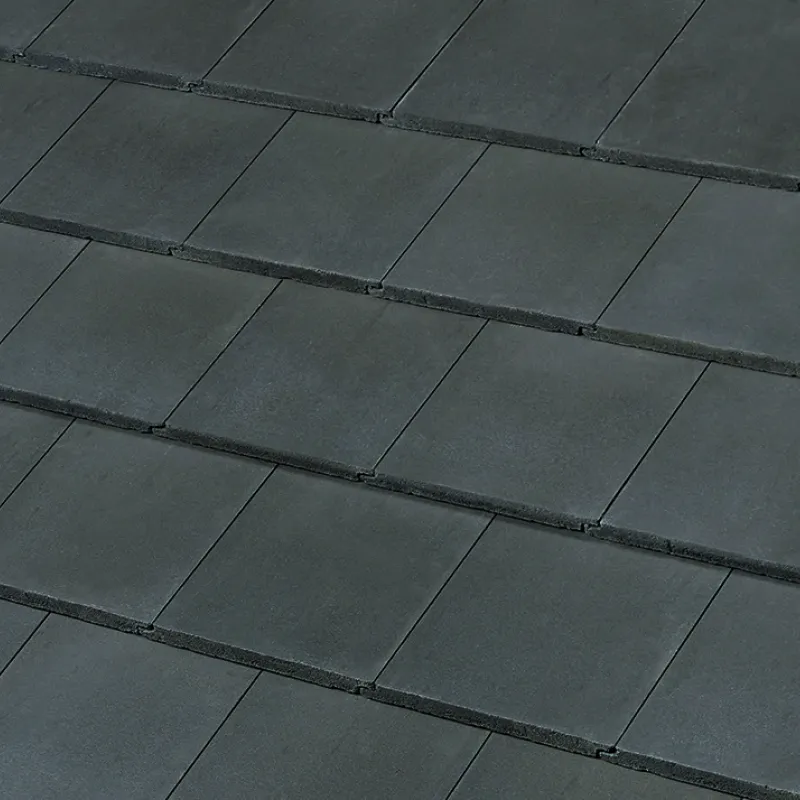
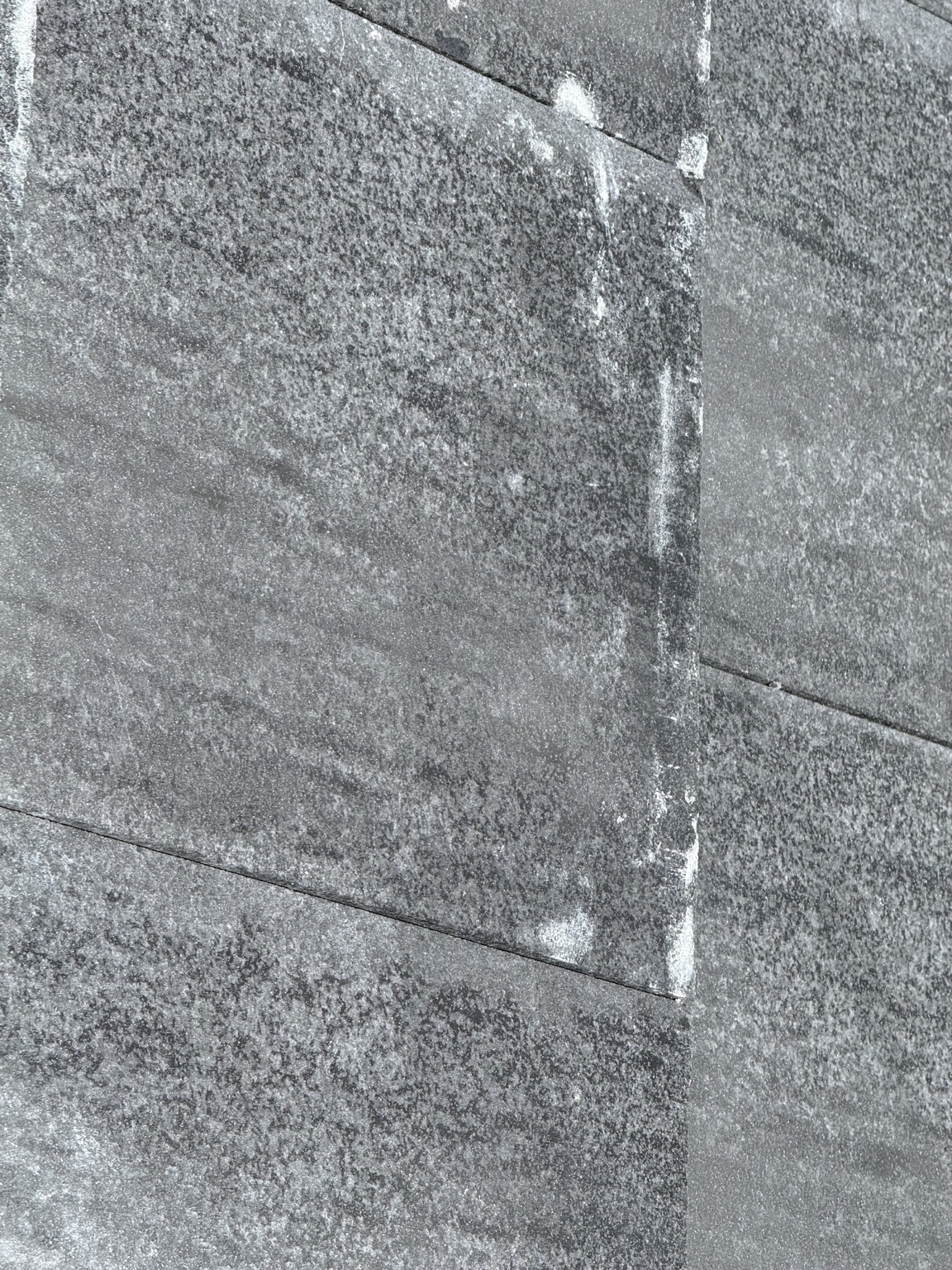
Manufacturer image reproduced for product comparison and identification. Westlake notes that online colors may vary from actual tile colors; the concern documented here includes discrete white marks, streaking and mottled surface appearance—not merely screen-to-product color variation.
My new Westlake Newpoint concrete tile roof showed widespread gray discoloration, repeated white dots and scuff-like surface marks. This site documents what I observed, what I was told, and the remedy that was offered.
The appearance is not a single isolated mark. From normal viewing locations, portions of the roof appear gray or hazy, with repeated pale marks visible across the dark tile surface. The image below is presented without filters or artificial recoloring.
The distributor described the roof as showing a combination of these three surface conditions. I am documenting those explanations, not independently certifying them.
A whitish mineral deposit that can occur in concrete and may diminish through weathering.
Residue created when concrete tiles are cut during installation.
Light marks attributed to wax used at contact points when tiles are stacked or handled.
Areas that appear physically scuffed. Unlike a deposit, removed surface color would not be expected to wash away.
This is a concise timeline based on my records and communications. I will update it if Westlake provides new information or a different resolution.
Westlake Newpoint concrete roof tiles were installed on my Florida home.
Grayish areas, pale dots and scuff-like marks were visible across portions of the roof.
I was told the appearance involved efflorescence, cut dust and wax transfer, and that some conditions might weather out over six to twelve months.
The proposed remedy was painting or color-correcting the roof, with a requested $2,000 payment from me.
I want this page to be accurate. The statements below distinguish what I personally observed from what was relayed to me by the contractor or distributor.
The visible conditions were characterized as a combination of efflorescence, cut dust and wax transfer, with some conditions expected to weather naturally.
Paraphrase of communications relayed to me; not presented as a direct quotation from a named Westlake representative.
Westlake ultimately did not offer to replace the affected roof tile or fully cover the proposed color correction. The best resolution communicated to me was painting the roof with a $2,000 homeowner contribution.
The marks repeat across numerous tiles on a newly installed roof. The physical pattern deserves a documented technical explanation.
I have not observed comparable widespread dots, streaks and gray surface patterns on the other neighborhood roofs I examined.
A prediction that the appearance may weather out in six to twelve months is not the same as a written diagnosis, an objective acceptance criterion or a guaranteed remedy.
I remain open to a reasonable resolution and will prominently update this page if Westlake reconsiders its position.